
Medically reviewed by Hootan Daneshmand, MD, board-certified plastic surgeon. Last reviewed: 10/27/2026.
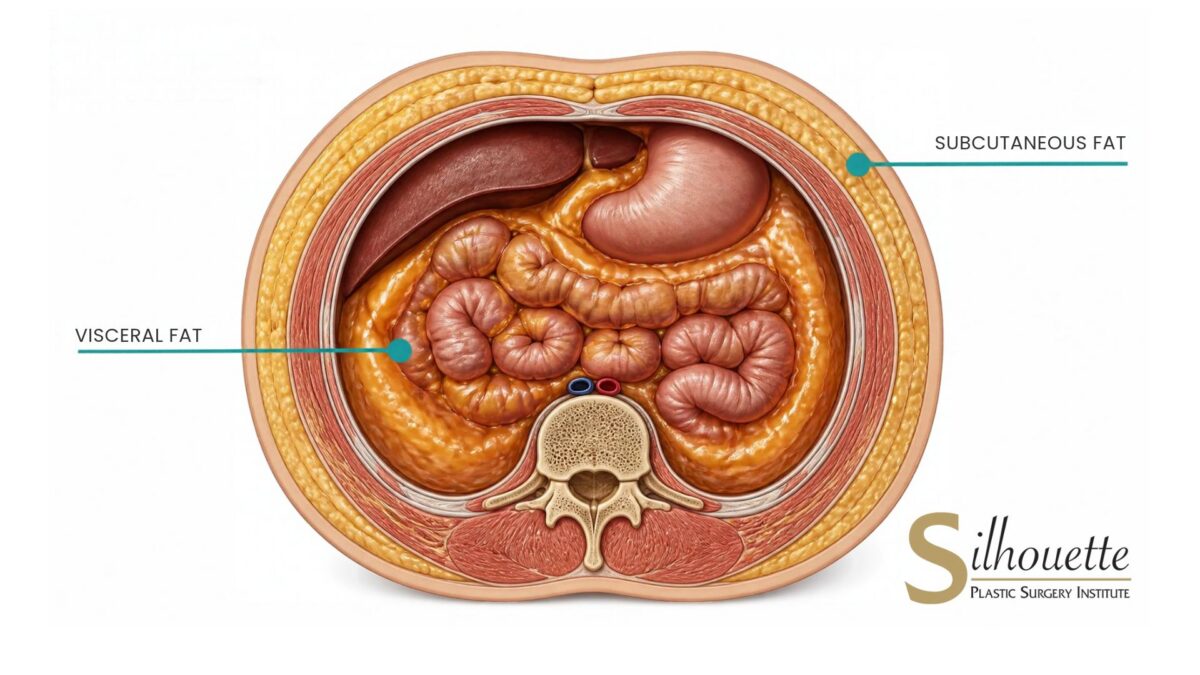
For those trying to learn more about visceral vs. subcutaneous fat, the difference comes down to where the body stores fat. Subcutaneous fat sits just beneath the skin, and you can pinch it. Visceral fat sits deeper, inside the abdominal cavity, wrapped around internal organs such as the liver and intestines. Where fat is distributed shapes how overall body fat affects your health.
The difference between visceral and subcutaneous fat determines which treatments work. Diet, exercise, and stress management can help reduce excess visceral fat. Cosmetic surgery targets subcutaneous fat under the skin. Knowing whether you store more visceral or subcutaneous fat helps set realistic expectations before scheduling body contouring procedures in Orange County, Newport, or Bakersfield.
Subcutaneous Fat vs Visceral Fat: Key Takeaways
-
1
The main difference between visceral and subcutaneous fat storage is where it's located. Visceral fat surrounds vital organs and can make the belly feel firm, while subcutaneous fat just beneath the skin can be easily pinched.
-
2
Visceral fat is metabolically active, increasing metabolic health risks, including insulin resistance, type 2 diabetes, and heart disease.
-
3
The waist-to-height ratio is the simplest self-check: a healthy target is a waist circumference under half your height.
-
4
Liposuction isn't a treatment for excess visceral fat reduction, but lifestyle changes can help reduce overall body fat distribution.
-
5
Plastic surgery treats subcutaneous fat and loose skin, affecting shape rather than metabolic health.
Visceral Fat vs Subcutaneous Fat: The Core Difference
The difference between visceral and subcutaneous fat lies in where the body stores fat and whether it’s metabolically active. Subcutaneous fat is a storage and insulation layer under the skin. Visceral fat sits around vital organs and is metabolically active. It releases hormones and triggers low-grade inflammation that affect blood sugar, blood pressure, and heart health.
What Is Visceral Fat?
Visceral fat is stored deep inside the abdominal cavity. It’s located around the liver, intestines, pancreas, and other internal organs. You can’t pinch it. Higher visceral fat typically makes the abdomen feel firm because excess visceral fat presses outward from the inside, according to the Cleveland Clinic.
What Is Subcutaneous Fat?
Subcutaneous fat sits just beneath the skin. You can pinch it on the abdomen, hips, thighs, and arms. It isn’t only cosmetic. It provides insulation, cushions muscles and bones, helps regulate body temperature, and stores energy for later use.
Feature | Subcutaneous Fat | Visceral Fat |
|---|---|---|
Where it sits | Directly beneath the skin, above the abdominal muscle wall | Inside the abdominal cavity, around the organs |
How it feels | Soft & pinchable | Can’t be pinched |
Common areas | Abdomen, hips, thighs, buttocks, arms | Central abdomen, around the liver, intestines, & pancreas |
Impact on long-term health | Lower metabolic risk | Linked to insulin resistance, type 2 diabetes, and cardiovascular disease |
Responds to diet & exercise | Yes, though stubborn pockets can persist | Yes; aerobic exercise is especially effective |
Removable with liposuction | Yes | No |
Not all body fat is created equal: different types of weight gain carry significantly different long-term health risks depending on where the body stores fat.
Visceral Fat vs Subcutaneous Fat Diagram: Where Each Layer Sits
Abdominal Cross-Section
Beneath the Surface
Visceral vs. Subcutaneous Fat
The abdomen is layered like this:
skin→subcutaneous fat→abdominal muscle wall→abdominal cavity→visceral fat around the liver, intestines, and pancreas.
Liposuction works in the second layer. It doesn’t help patients lose visceral fat because it’s outside of a cannula’s reach.
Where excess visceral fat sits also matters for the liver. Blood from visceral fat drains through the portal vein straight to the liver. High visceral fat is closely linked to metabolic dysfunction-associated steatotic liver disease (MASLD), formerly called nonalcoholic fatty liver disease. A 2025 analysis of 3,025 U.S. adults found that people with the highest visceral fat scores had about six times the odds of fatty liver disease.
Subcutaneous vs Visceral Belly Fat: Why Abdominal Fat Protrudes
A protruding belly doesn’t always mean excess visceral fat. Pinchable subcutaneous fat can create the same shape. Diastasis recti, a separation of the abdominal muscles, can do the same. Two people with identical waist measurements can have very different abdominal fat profiles.
Pregnancy and major weight gain or loss can pull the abdominal muscles apart along the midline, which lets the belly push forward. Because the cause is structural, fat loss alone won’t close the gap. Diastasis recti surgery repairs the muscle wall and can be combined with a tummy tuck or mommy makeover.
Do I Have Visceral Fat or Subcutaneous Fat?
Only a CT, MRI, or DEXA scan measures visceral fat directly. For most people, a pinch test and a tape measure give a useful picture. The abdominal fat you can grab between your thumb and fingers is subcutaneous. A firm belly with few pinch points suggests visceral fat.
To measure your waist, wrap the tape just above your hip bones after breathing out. The National Heart, Lung, and Blood Institute links a waist above 35″ in women or 40″ in men to higher risk of type 2 diabetes, high blood pressure, and heart disease.
Waist-to-height ratio adjusts for height. Divide your waist measurement by your height, using the same units for both. Under NICE guideline NG246, a waist-to-height ratio of:
- 0.4 to 0.49 is healthy
- 0.5 to 0.59 signals increased central obesity
- 0.6+ is high risk
The simple target: keep your waist under half your height.
Self-Check
Your Waist-to-Height Ratio
Ratio 0.48, Healthy
0.48
HealthyRatio bands: NICE guideline NG246. Waist thresholds: National Heart, Lung, and Blood Institute. A screening estimate, not a diagnosis.
Imaging isn’t part of a routine physical, so ask your doctor about a DEXA scan if you want a direct measurement. Otherwise, tracking your waist measurements over time is the practical way to monitor change.
Visceral Fat Health Risks: Insulin Resistance, Heart Disease, & More
When it comes to visceral vs. subcutaneous fat health risks, visceral fat is the more dangerous of the two. Excess visceral fat affects hormones and drives low-grade inflammation, which is linked to insulin resistance, type 2 diabetes, high blood pressure, and cardiovascular disease. Subcutaneous fat carries less risk.
The Lancet Diabetes & Endocrinology concluded that visceral fat, measured by CT or MRI, independently predicts cardiovascular disease, metabolic syndrome, and death. The American Heart Association likewise names waist circumference as a heart disease risk marker independent of BMI.
Overall body fat or weight alone can miss this risk. The 2025 Lancet Commission moved beyond BMI and recommends confirming overall body fat with waist circumference, waist-to-hip ratio, or waist-to-height ratio. Your waist measurement can tell you more than the scale.
| Chronic Disease | Body System | Excess Visceral Fat & Higher Risk Profile |
|---|---|---|
| Type 2 diabetes | Metabolic | 70% higher risk of developing type 2 diabetes, even after adjusting for BMI & lifestyle. Source: Blobank MRI study |
| Coronary artery disease | Cardiovascular | Increased risk of coronary artery disease independent of BMI. Source: Nature Communications |
| High blood pressure | Cardiovascular | Hypertension linked in 7,661 U.S. adults studied. Source: Journal of Clinical Hypertension |
| Fatty liver disease (MASLD) | Liver | ~6x the risk of fatty liver disease |
| Certain cancers, including colorectal cancer | Multiple internal organs | Linked to higher cancer risk independent of BMI & waist measurement. Source: National Cancer Institute |
| Alzheimer’s disease markers | Brain | Accounts for 77% of high BMI’s effect on amyloid buildup in cognitively normal midlife adults. Source: RSNA |
How to Reduce Visceral Fat: Weight Loss, Exercise, Sleep, & Stress Management
To lose visceral fat, most patients must lose weight. This type of fat responds to regular exercise, a balanced diet, quality sleep, and stress management for people with chronic stress. You can’t spot-reduce visceral fat.
A 2024 JAMA meta-analysis found that each extra 30 minutes of aerobic exercise per week reduced visceral fat, leading to a smaller waistline and lower body fat. Meaningful changes appeared at 150+ minutes per week of moderate-to-vigorous activity.
Diet works alongside exercise. Building meals around lean protein, fiber, and complex carbohydrates, while cutting refined carbs and added sugars, makes a steady calorie deficit easier to maintain. No single food reduces visceral fat.
Sleep matters too. In a 2022 randomized trial, two weeks of restricted sleep increased visceral fat storage by 11% in healthy adults. Managing cortisol, the stress hormone, is a low-risk habit that supports better sleep and healthier eating.
For people with obesity, medical treatment may be part of the plan. Gastric bypass surgery and prescription medications are decisions to make with a doctor. A 2025 ASPS report found that 82% of member surgeons had received consultation requests related to GLP-1 medications.
Fat Removal Surgery: What Cosmetic Procedures Can & Can’t Do
Body contouring removes subcutaneous fat, excess skin, or both. None of these procedures reduces visceral fat.

Before

After
Subcutaneous Fat Surgery Options
Liposuction and tummy tucks are two of the most common cosmetic surgeries. The ASPS 2025 report counted 317,196 liposuction procedures and 173,251 tummy tucks.
Liposuction removes pinchable fat from the abdomen, flanks, and thighs. When loose skin is part of the problem, a tummy tuck or mini tummy tuck can tighten the abdomen. An arm lift (brachioplasty) can help patients lose pinchable arm fat without exercise, and a thigh lift reshapes the thighs. A lower body lift addresses the abdomen, hips, and buttocks together.
For smaller pockets, CoolSculpting is a nonsurgical option for subcutaneous fat. To see how contouring changes shape, browse our liposuction before-and-after photos and the tummy tuck before-and-after gallery.
| Procedure | What It Addresses | Effect on Visceral Fat Reduction |
|---|---|---|
| Liposuction | Pinchable subcutaneous fat in targeted areas | None |
| Tummy Tuck | Excess abdominal skin, lower belly fat, separated abdominal muscles | None |
| Arm Lift (Brachioplasty) | Loose skin & fat on the upper arms | None |
| Thigh Lift | Loose skin & fat on the thighs | None |
| Lower Body Lift | Loose skin & fat around the abdomen, hips, & buttocks | None |
| CoolSculpting | Smaller pockets of subcutaneous fat, nonsurgical | None |
Limitations of Visceral Fat Surgery
A tummy tuck flattens the outer layers of the abdomen, but it can’t help reduce visceral fat located behind the muscle wall. As ASPS explains, liposuction targets only subcutaneous fat, and diet and exercise effectively reduce visceral fat.
If you’re unsure whether you have visceral fat or subcutaneous fat in your belly, Dr. Daneshmand can examine your abdomen and walk you through your options. Call the Orange County office at (949) 359-8397 or the Bakersfield office at (661) 491-7673.
Why Removing Subcutaneous Fat Doesn’t Lower Metabolic Risk
Liposuction is not a metabolic health treatment. Removing subcutaneous fat leaves other types of fat in place, along with their associated health risks. Research also suggests that staying active after surgery helps minimize weight gain.
A 2023 meta-analysis reported several short-term metabolic changes after fat removal surgery. Only a modest improvement in insulin sensitivity lasted over six months. It didn’t significantly reduce inflammation, triglycerides, LDL cholesterol, or fasting blood sugar.
A 2025 JPRAS Open study followed 12 women after small-volume liposuction. Over the long term, their body fat dropped slightly, but they still maintained high blood pressure and insulin sensitivity. Their visceral fat did not increase.
Surgery reshapes your body, and lifestyle protects your long-term health. Once your surgeon clears you for activity, regular exercise remains the most reliable way to lose visceral fat distribution and protect your results.
Visceral vs Subcutaneous Fat FAQ
How to get rid of visceral fat?
The best way to get rid of visceral fat is overall weight loss supported by exercise, a balanced diet, quality sleep, and stress management
- A 2024 JAMA Network Open meta-analysis linked more weekly exercise to reduced visceral fat.
- Balanced diet: eating lean proteins while cutting refined carbohydrates and added sugars makes a calorie deficit easier to sustain.
- For people with obesity, a physician-led plan may include bariatric surgery or medication.
Is visceral fat hard or soft?
Visceral fat, particularly belly fat, is typically hard. Subcutaneous fat feels soft and can be pinched. A DEXA scan can confirm whether the fat is subcutaneous or visceral.
How to get rid of visceral belly fat?
Visceral belly fat responds to whole-body changes such as weight loss, aerobic exercise, and adequate sleep, not to spot exercises.
- Crunches strengthen the abdominal muscles but don’t burn the fat beneath them.
- Track progress with waist circumference, not just the scale.
- If your belly fat still protrudes after weight loss, ask a doctor to check for diastasis recti.
Can liposuction remove visceral fat?
No. Liposuction cannot remove visceral fat. It only removes subcutaneous fat. Liposuction is a body-contouring procedure, not a weight-loss treatment.
How to lose subcutaneous fat?
Subcutaneous fat shrinks as you lose overall weight. Liposuction can remove stubborn pockets of lower belly fat or subcutaneous fat in other areas, or CoolSculpting can reduce it.
- A calorie deficit plus regular exercise reduces fat stores throughout the body.
- Loose skin after weight loss may require plastic surgery or non-surgical contouring procedures.
Is visceral fat harder to lose than subcutaneous fat?
No, visceral fat is easier to lose than subcutaneous fat.
- Visceral fat responds very quickly to hormones. When you start eating better and exercising, your metabolism targets this deep fat first.
- Subcutaneous fat, like the fat on your lower belly, is stubborn. It has fewer blood vessels and harder-to-activate receptors, so your body holds onto it much longer.