
Yes, CO2 laser resurfacing can hurt, so pain control is part of every treatment plan. Most patients describe heat and stinging during treatment and a mild sunburn-like sensation for several days afterward. The treated area and depth determine how much you feel, so providers plan CO2 laser treatments around both.
Why CO2 Laser Resurfacing Causes Discomfort
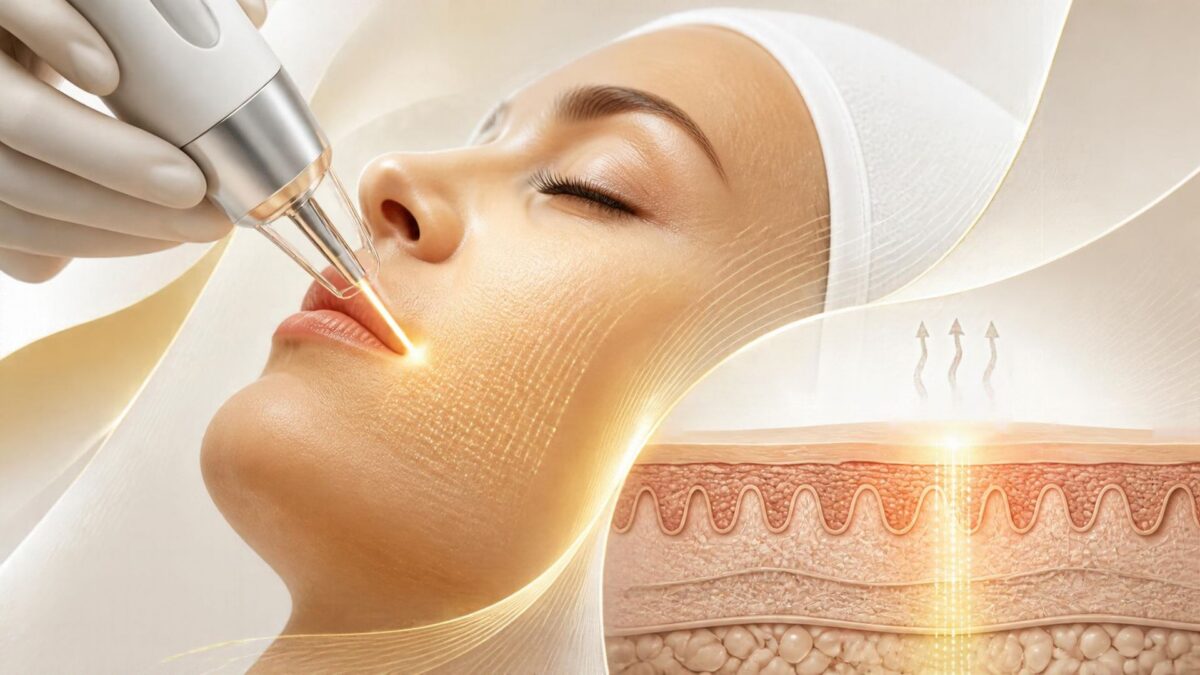
The CO2 laser causes discomfort because it removes the outer layer of skin and heats the dermis underneath. According to ASPS, that heat stimulates new collagen so new skin forms smoother and firmer. Treated skin is deliberately injured in a controlled way while preserving surrounding healthy tissue. Collagen remodeling then continues for months, which makes CO2 treatments more intensive than gentler laser skin resurfacing options.
Fractional vs. Fully Ablative CO2: How Treatment Depth Changes Comfort
Fractional CO2 is more tolerable than fully ablative CO2 because it treats microscopic columns of skin and leaves untreated tissue between them to speed healing. Fully ablative CO2 resurfaces the entire treated area, typically requires deeper anesthesia, and brings a longer recovery. Newer short-pulse CO2 lasers limit heat damage to surrounding tissue.
What CO2 Laser Treatment Feels Like, Step by Step
A CO2 laser treatment moves through five phases, each with its own sensation. CO2 laser resurfacing is an outpatient procedure that lasts 30 minutes to 2 hours, depending on the size of the treatment area.
- Prep and cleansing: A facial cleanse removes oil, makeup, and bacteria.
- Numbing: Topical cream needs time to take effect; injected local anesthetic causes a brief pinch before the area goes numb.
- Eye protection: Protective eyewear or shields stay on throughout.
- Laser passes: Patients describe heat, prickling, or snapping, often more intense around the mouth and eyes.
- Cooling and dressing: The skin is cooled and covered with a protective dressing. A sunburn-like sensation builds over the next several hours.
How Is CO2 Laser Pain Managed During & After Treatment?
CO2 laser pain is managed with anesthesia matched to treatment depth during the procedure and with simple comfort measures at home afterward. Dr. Daneshmand plans both before treatment begins, based on the size of the treatment area and whether other procedures are performed simultaneously.
Numbing, Local Anesthesia, & Sedation
Lighter fractional treatments often rely on topical numbing and skin cooling, while deeper or full-face laser resurfacing may require injected local anesthetic, oral or IV sedation, or, on rare occasions, general anesthesia. Dr. D will confirm which method applies.
Modern fractional settings keep pain moderate for many patients. In a 2026 Journal of Cosmetic Dermatology study of 38 patients treated with a newer short-pulse fractional CO2 mode, most without topical anesthetic, the average pain rating was 4.8 out of 10.
At-Home Care After CO2 Laser Treatment
At-home care focuses on reducing swelling and protecting healing skin:
- Head elevated: Sleep on an extra pillow to reduce facial swelling.
- Ice pack: Use an ice pack during the first day or two.
- Prescribed pain relief: Take medication only as directed by your healthcare provider.
- Gentle cleansing: Clean treated areas with a soft cloth, cleanse gently with saline or diluted water, and pat dry.
- Prescribed ointment: Keep the skin moist with the ointment your surgeon recommends.
- No picking: Scratching or picking at crusts can cause scarring.
- Don’t apply makeup or exfoliating acids until your healthcare provider clears you: The skin barrier needs time to fully heal before applying makeup or being exposed to harsh active ingredients.
Is CO2 Laser Painful for Everyone? What Changes the Experience
No, CO2 laser resurfacing isn’t painful for everyone. Depth matters most, followed by location: skin around the mouth and eyes is more sensitive than other treatment areas. Full-face laser resurfacing involves more overall discomfort than spot treatment, and deeper acne scarring may require more aggressive settings. Personal pain tolerance and skin tone also shape the settings and anesthesia your surgeon recommends.
Additionally, if you combine laser resurfacing with facelift surgery, you won’t feel the laser treatment because you’ll be under general anesthesia.
CO2 Laser Recovery: How Discomfort Changes Day by Day
Irritation peaks in the first few days, then shifts to tightness and itching as the skin peels. ASPS describes the early feeling as a mild sunburn, notes that deeper laser treatments leave skin raw and oozing yellowish drainage, and reports that skin dries and peels within the first week.
CO2 recovery generally takes up to two weeks. The ASDS reports swelling for 24 to 48 hours and itching or stinging for 12 to 72 hours.
Timeframe | What You May Feel | What You May See | Activity Guidelines |
|---|---|---|---|
Days 1 to 2 | Mild sunburn-like heat, stinging, tightness | Redness & swelling; raw skin or yellowish drainage after deeper treatments | Rest, head elevated, ice pack, cleanse gently, & apply ointment |
Days 3 to 4 | Stinging eases; tightness & early itching | Crusting after deeper treatments | Continue to cleanse gently; do not pick or scratch |
Days 5 to 7 | Dryness, tightness, itching | Skin dries & peels | Let peeling skin shed on its own |
Week 2 | Discomfort largely resolving | New pink skin emerging | Resume routines as your surgeon clears you |
Weeks 3 to 6 | Sensitivity to sun exposure & products | Pink or red tone | Daily broad-spectrum SPF; you can apply makeup (mineral) once approved |
Months 2 to 12 | Little to no discomfort | Pinkness gradually lightens | Continue strict sun protection |
Day-by-day CO2 Laser Resurfacing Recovery Photos
CO2 Laser Resurfacing Recovery
Move the slider to see how treated skin typically looks and what your aftercare involves at each stage.
Day 0: Treatment Day
What you will see
Treated skin looks deep red and raw and feels hot, much like a strong sunburn. Tiny pinpoint marks from the laser are visible, and light oozing begins within hours of treatment.
What to do
Keep a thick occlusive layer of the ointment your surgeon prescribed over every treated area. Use cool compresses for comfort and sleep with your head elevated to limit swelling.
Day 1: Swelling Builds
What you will see
Swelling increases, most noticeably around the eyes and jawline. Clear or yellowish fluid weeps from the skin, which is a normal part of the healing response.
What to do
Follow your soak schedule (dilute vinegar or saline, as directed), then reapply ointment so the skin never dries out. Stay indoors and avoid touching the treated area.
Day 3: Peak Swelling Eases
What you will see
Swelling usually peaks around day two or three and then begins to settle. The surface darkens to a bronzed, crusted look, and itching often starts as new skin forms underneath.
What to do
Do not pick, scrub or peel the crust. Keep up soaks and ointment, and ask your surgeon about an approved antihistamine if itching disrupts sleep.
Day 5: Peeling Begins
What you will see
The old surface lifts away in flakes, revealing patches of fresh pink skin. Swelling is noticeably lower, though skin still feels tight and sensitive.
What to do
Let flakes shed on their own and keep the skin moist with ointment. Avoid makeup, exfoliants and any products your surgeon has not cleared.
Day 7: New Skin Surfaces
What you will see
For most patients the surface has healed over by about one week. Skin is smooth, pink and delicate, with a few last flakes along the hairline or jaw.
What to do
Your surgeon may switch you from ointment to a gentle moisturizer. Start a mineral sunscreen when cleared and keep sun exposure to a minimum.
Day 10: Pink Phase
What you will see
Skin looks pink, similar to a moderate sunburn, and feels much more comfortable. Many patients are cleared for mineral makeup and return to work around this point.
What to do
Use only surgeon-approved cleansers, moisturizer and mineral makeup. Wear a broad-spectrum mineral sunscreen and a hat any time you are outdoors.
Day 14: Redness Softens
What you will see
Pinkness continues to fade and skin tone begins to even out. Some dryness or tightness is common as the new skin matures.
What to do
Keep daily SPF 30 or higher mineral sunscreen and a gentle routine. Hold off on retinoids, acids and other active products until your surgeon clears them.
Month 1: Fading Flush
What you will see
A light pink flush may remain and fades week by week. Under the surface, new collagen is forming, so texture keeps improving even when change seems slow.
What to do
Stay strict with sun protection. Let your surgeon know about any patches that darken, since early treatment of pigment changes works best.
Month 3: Tone and Texture Refine
What you will see
Residual redness has resolved for most patients. Skin looks more even, fine lines appear softer and texture feels noticeably smoother.
What to do
Resume your long-term skincare plan with your surgeon’s guidance, and keep daily sunscreen in place to protect your results.
Month 6: Mature Results
What you will see
Results are considered mature at about six months, with smoother texture, softened wrinkles and more uniform tone. Collagen can continue to build beyond this point.
What to do
Maintain results with daily sun protection and a medical-grade skincare routine, and schedule a follow-up to discuss maintenance treatments if desired.
Recovery varies with treatment depth, skin type and aftercare.
Ready for real results? See more laser resurfacing before-and-after photos
CO2 Laser Downtime: Physical vs. Social Recovery
Physical healing takes up to two weeks, but social downtime lasts longer because of prolonged redness or lingering pinkness. The new skin lightens over several weeks, often longer for people with red or blonde hair. Most patients stay home during peeling and major redness, so schedule laser treatment well ahead of major events.
Returning to Normal Activities
You can resume normal activities and wear mineral makeup within 7-10 days, after the sloughing phase is complete. However, wait to do intense workouts and swim until you’re cleared. Sweat, chlorine, and lake or ocean water can irritate open skin and introduce bacteria. Also, wait to use exfoliating acids and shave your face until you’re cleared.
How Skin Heals After CO2 Laser, and Why It Itches
As skin heals, first, you’ll notice clear or slightly yellowish drainage or weeping (lymphatic drainage). Then, a new epidermis forms over the treated area and the skin barrier rebuilds. That is why tightness and itching are normal in the middle of the healing process. Many patients notice the treated skin itches most as crusts loosen and dry skin begins to shed.
Keeping new skin moisturized, avoiding hot showers, and resisting the urge to scratch treated skin all help.
When to Call Your Healthcare Provider About CO2 Laser Pain
You should report any pain that worsens after the first week to your healthcare provider immediately, along with any of the following:
- Increased redness: Prolonged redness that spreads, or redness that becomes more visible after it had been improving.
- Pus or cloudy drainage: Discharge that differs from the normal yellowish drainage of early healing.
- Fever: Any fever during recovery warrants a call, even if it’s low grade.
- New blisters or cold sore reactivation: Painful clusters around the mouth. Antiviral medication before and after laser treatment helps prevent reactivation.
- Darkening patches: Skin turning darker than your natural skin tone, a possible sign of post-inflammatory hyperpigmentation.
Sun Protection After CO2 Laser Treatment
Healing skin is highly vulnerable to ultraviolet exposure, so strict sun avoidance comes first, followed by daily broad-spectrum mineral sunscreen with zinc oxide or titanium dioxide once your healthcare provider approves direct sun exposure.
Diligent sun protection, especially for the first several weeks, is required. Sun damage can undo laser treatment results and leave you unhappy with the final outcome.
A 2023 review in Dermatology Reports found post-inflammatory hyperpigmentation rates after CO2 laser resurfacing ranging from 0% to 100% across studies, depending on the treatment. High-quality data on risk factors remain limited, so preventing sun exposure is the priority.
CO2 Laser Treatments & Skin Tone
Deeper skin tones carry a higher risk of post-inflammatory hyperpigmentation, so clinicians adjust settings, pre-treatment preparation, and treatment timing. A 2025 systematic review in the Australasian Journal of Dermatology cites rates of 10% to 20% among patients with darker skin tones undergoing laser treatment.
Dr. Daneshmand starts with a customized skincare regimen several weeks before laser treatment, tailored to the patient’s skin tone and type. In California, timing matters. Scheduling outside peak sun months makes strict sun avoidance easier during healing.
How CO2 Laser Pain Compares to Erbium, IPL, Pico Laser, & Chemical Peels
A CO2 laser treatment is the most intense of these options, so it generally brings the most discomfort and downtime. Gentler laser treatment options and chemical peels generally trade comfort for more treatment sessions to resurface and stimulate collagen production.
Treatment | Ablative or Non-Ablative | What Patients Typically Feel | Typical Downtime | Where It Fits |
|---|---|---|---|---|
CO2 laser | Ablative | Heat & stinging during treatment; sunburn-like discomfort for several days | Up to two weeks | Deeper wrinkles, acne scarring, significant sun damage |
Erbium laser | Ablative | Similar to CO2 but typically milder | One full week | Superficial to moderately deep lines |
Non-ablative | Mild snapping, tingling, or warm stinging sensation | None | Pigment & texture concerns | |
Varies by depth | Mild tingling (light) to acute pain (deep) | Varies by peel depth | Tone, texture, & fine lines |
Preparing for a More Comfortable CO2 Laser Treatment
Pre-treatment preparation reduces pain and the risk of complications. Dr. Daneshmand will provide a personalized checklist before the procedure. It generally includes the following:
- Disclose cold sore history: Antiviral medication can prevent reactivation around the mouth.
- Pause retinoids and exfoliating acids: Stop Retin-A® and exfoliating acid products, such as glycolic acid.
- Ultraviolet exposure and sun avoidance: Avoid tanning beds and serious sun exposure. Tanned or recently sunburned skin has a higher risk of post-inflammatory hyperpigmentation. For strict sun protection, use a broad-spectrum mineral sunscreen with SPF 30 or higher.
- Stop smoking: Tobacco smoke complicates healing.
- Treat active acne first: Control active acne breakouts before laser resurfacing.
- Review medications: Avoid products that affect clotting, such as aspirin, ibuprofen, or vitamin E.
- Arrange a driver: If you require sedation or general anesthesia for your laser resurfacing treatment.
FAQs About CO2 Laser Pain
Is CO2 laser painful without numbing?
CO2 laser can be painful without numbing, especially at deeper settings, which is why providers include numbing during the pre-treatment preparation. In a 2026 study of a newer fractional CO2 mode, patients treated mostly without topical anesthetic rated their pain at an average of 4.8 out of 10.
Does fractional CO2 hurt less than fully ablative CO2?
Fractional CO2 generally hurts less than fully ablative CO2 because it treats only a fraction of the skin.
- Untreated skin between the microscopic treatment columns speeds healing.
- Fractional CO2 is still an ablative laser, so numbing remains standard.
How long does itching last after CO2 laser?
Itching after CO2 laser resurfacing usually lasts a few days and typically stops after the first week.
- Many patients report itching and crusting over the first few days, with peeling on days 5-7, which can trigger a second wave of itching as the new skin barrier forms.
- Keep the treated area moist for the first five days: Apply petroleum jelly or an antibacterial cream after treatment to prevent scratching and scarring.
What is the CO2 laser under-eye recovery time?
CO2 laser under-eye recovery typically takes 7-14 days to see initial results, with full healing taking 1-3 months. The under-eye area is more prone to swelling than other treatment areas. Your healthcare provider may prescribe oral steroids to manage swelling.
How long after CO2 laser can I wear makeup?
You can usually wear makeup 7 to 14 days after CO2 laser, once your skin has fully re-epithelialized. This means waiting until the healing process is well along and the surrounding tissue is no longer raw, open, weeping, or actively crusting or peeling.
- Fractional CO2 laser: 5-10 days
- Full ablative CO2 laser: 10-14 days
ASPS recommends oil-free mineral makeup for the first 2-3 months. Don’t wear makeup until your healthcare provider clears you.
How long after CO2 laser will I see final results?
You will see final results after CO2 laser resurfacing up to a year later. The initial results typically appear after two weeks, once the treated area has healed. Collagen remodeling continues for months.