
Medically reviewed by Hootan Daneshmand, MD, board-certified plastic surgeon. Last reviewed: October 27, 2026.
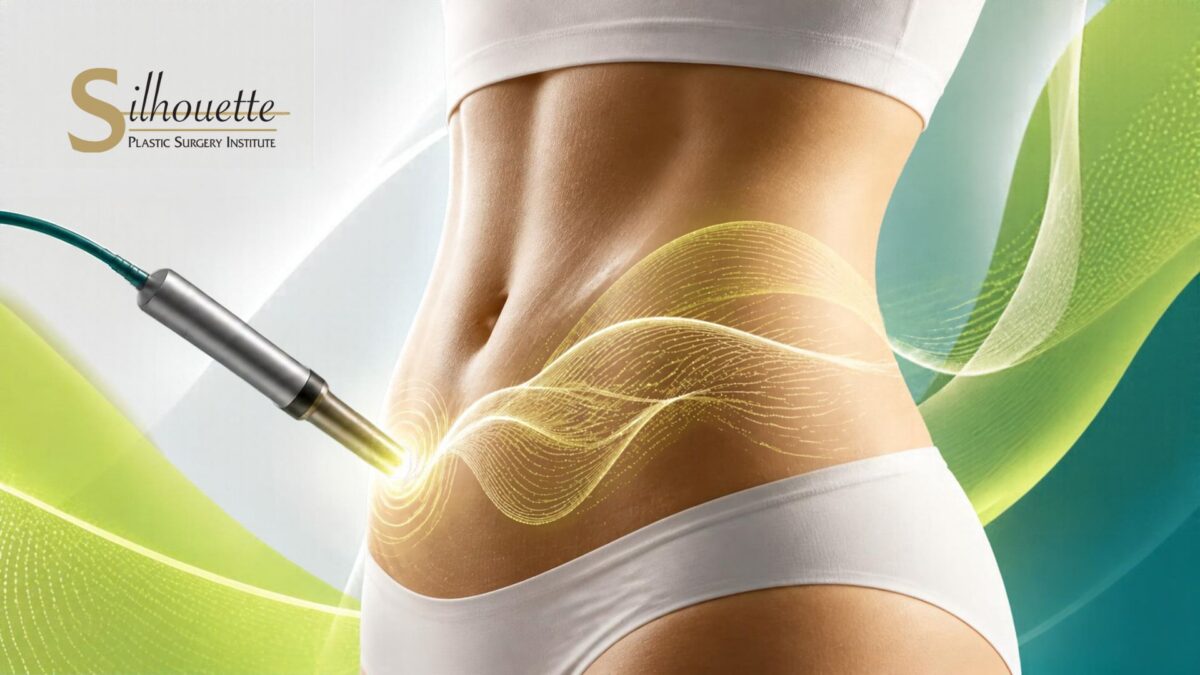
What is Vaser Lipo? Vibration Amplification of Sound Energy at Resonance is a third-generation liposuction technique that uses ultrasound technology. The thin, solid Vaser device sends ultrasound energy into localized fat deposits infiltrated with tumescent fluid, which emulsifies stubborn fat cells. A suction cannula then removes the loosened fatty tissue through small incisions, so the FDA-cleared, branded device is a more minimally invasive form of liposuction, not a separate procedure.
The 2025 ASPS Procedural Statistics Report ranked liposuction the top plastic surgery for the fifth straight year, at 317,196 procedures. The page on Vaser liposuction with Dr. Daneshmand covers treatment areas, who is a good candidate, and consultation planning.
Here, we answer “What is Vaser lipo?” and provide extra context for patients who want to learn more about the Vaser liposuction procedure.
- Device class
- Third-generation ultrasound-assisted liposuction
- Operating frequency
- 36 kHz
- Probe design
- Solid, grooved, small-diameter titanium probes
- Energy modes
- Continuous and pulsed; pulsed preferred by a 2023 expert consensus
- FDA status
- 510(k) cleared for fragmentation, emulsification, and aspiration of subcutaneous fat for aesthetic body contouring
- What it is not
- A laser, a weight loss treatment, or a non-surgical procedure
Sources: FDA 510(k) K190551; Ruff et al., PRS Global Open, 2023.
How Vaser Technology Works
Vaser liposuction uses ultrasound energy to target excess fat cells. The probe vibrates at 36 kHz, close to fatty tissue resonance, so energy concentrates in fat deposits instead of spreading into underlying muscles. Pulsed mode delivers energy in bursts, reducing the total energy that reaches tissue, and a 2023 consensus names pulsed mode the preferred setting for Vaser liposuction performed by experts.
The energy frees unwanted fat mainly through cavitation. Tiny gas bubbles in the tumescent fluid grow and collapse, wedging fat cells apart until they form an emulsion. Blood vessels and nerves are denser and more elastic than localized fat deposits, so the procedure doesn’t target them.
Plastic surgeons utilizing ultrasound technology predates Vaser liposuction. Italian surgeon Michele Zocchi pioneered ultrasonic fat emulsification with first-generation probes 4 to 6 mm wide running at 20 kHz. Sound Surgical Technologies introduced VASER in 2001 with thinner, grooved titanium probes that deliver less energy while still removing fat efficiently.
Why Dr. Daneshmand’s Engineering Background Matters for Vaser Lipo
Dr. Daneshmand graduated with honors in electrical engineering from UC Irvine before earning his MD at the University of Southern California. That training shapes how he evaluates energy-based devices:
“Ultrasound is energy traveling through a medium, and the medium matters. At the probe tip, fat responds to that frequency well before vessels and nerves do. That’s why energy settings and technique matter as much as the device itself. The goal is to deliver enough energy to free the fat, and no more.”
The Vaser Liposuction Procedure: Three Phases of Fat Removal
Vaser liposuction moves through three phases of fat removal:
- Infiltration: The procedure begins with tumescent fluid, a dilute saline solution, introduced through small incisions to swell and firm the fatty tissue.
- Emulsification: Solid ultrasound probes pass through the fat and convert it into an emulsion.
- Aspiration: A cannula connected to suction removes the emulsified fat. The plastic surgeon shapes various areas of the body as they remove unwanted fat.
Benefits of Vaser Liposuction: Less Blood Loss & Better Skin Tightening
The strongest evidence for Vaser technology comes from a split-body randomized trial in which each patient received Vaser liposuction on one side and traditional liposuction on the other. Nagy and Vanek reported a 53% improvement in skin retraction and 26% less blood loss on the Vaser side.
A 2022 Aesthetic Plastic Surgery series of 261 patients treated over 15 years found complication rates lower than traditional liposuction, with equal or higher satisfaction. The 2023 consensus panel agreed that significant blood loss after Vaser liposuction is rare.
These findings have limits. Claims of less bruising, swelling, or discomfort also rest on the surgeon’s experience rather than controlled trials.
Vaser Liposuction vs Traditional Liposuction
The difference between Vaser liposuction and traditional liposuction is how it loosens excess fat deposits. Traditional lipo relies on the cannula’s back-and-forth motion to break stubborn fat free. Vaser liposuction emulsifies fat cells, so the cannula removes the already-released fat. Most modern techniques start with tumescent fluid.
Vaser liposuction helps most where fat cells are dense or scarred, such as the back, flanks, and male chest. A 2025 Aesthetic Surgery Journal cohort paired Vaser liposuction with intraoperative ultrasound imaging for secondary abdominal liposuction, where fibrosis resists suction. Lipo 360 describes treatment areas, not an energy source, so it can use either approach. Most patients seeking minimally invasive fat removal choose Vaser liposuction.
Suction-assisted (traditional)
- How Fat Is Loosened
- Cannula motion alone
- Often Used For
- General removal of softer fat
Power-assisted
- How Fat Is Loosened
- Motorized, vibrating cannula
- Often Used For
- Larger volumes or firmer fat
Laser-assisted
- How Fat Is Loosened
- Laser light and heat
- Often Used For
- Smaller, localized areas
Ultrasound-assisted (Vaser)
- How Fat Is Loosened
- Sound energy emulsifies fat before suction
- Often Used For
- Fibrous areas, revision cases, definition work
Vaser Lipo Safety: Heat, Seroma, & Technique
Vaser liposuction safety depends on managing heat, seroma, and technique. The probe generates heat, so burns at the skin or incision sites are possible, and the ultrasound pass adds operating time. Seroma, a fluid pocket under the skin, is among the most common local complications.
Technique influences these risks heavily. An 18-year review of 5,052 high-definition liposculpture patients reported seroma rates falling from 18% with traditional methods to 7% with Vaser liposuction and 2.1% with later refinements.
High-Def Vaser Lipo & Body Contouring
High-definition Vaser liposuction uses pulsed, superficial passes to remove fat in patterns that follow the underlying muscles. The technology makes close-to-the-skin work practical. The goal is a visibly contoured appearance, such as six-pack abs or other sculpted muscle groups, rather than simple fat removal.
The technique closely relates to abdominal etching and falls under broader body contouring. With proper training, the 2023 consensus panel considered high-definition Vaser work appropriate for the arms, chest, abdomen, back, buttocks, thighs, and calves. Lean, athletic patients with good skin tone show the best definition, and some men pair it with a daddy makeover for optimal results.
Vaser cannot remove loose skin, so some patients may require a tummy tuck or arm lift.
Vaser Fat Transfer for BBL & Breast Augmentation
Fat harvested with Vaser liposuction stays viable, so you can purify it for fat grafting. At clinically relevant settings, the procedure doesn’t compromise the structure or growth capacity of harvested fat cells, making it a practical donor source for fat grafting.
Vaser fat grafting can add volume to the buttocks in a Brazilian butt lift, to the chest in a fat transfer breast augmentation, or to the face. Facial fat grafting grew 39% in 2025, the largest gain of any cosmetic surgery ASPS tracked. BBL recovery planning differs from Vaser liposuction alone.
Why Compression Garments Matter After Vaser Lipo
Compression garments support optimal healing after Vaser liposuction. They limit swelling and fluid buildup while the surrounding tissue tightens around the new contour. Patients typically wear compression garments all day for around 1.5 months, a practice similar to traditional liposuction. Your surgeon sets the exact schedule. Like many surgeons, Dr. D recommends manual lymphatic drainage after liposuction.
The liposuction recovery timeline covers returning to work and exercise. Liposuction before-and-after photos show smoother results after swelling fades.
Vaser Lipo FAQs
If you are still asking, “What is Vaser lipo?” and “How does Vaser liposuction fit my aesthetic goals?”, these answers address the most common follow-up questions.
How much weight can I lose with VASER liposuction?
You cannot lose weight with Vaser liposuction. The procedure isn’t a weight-loss solution; it reshapes specific areas by targeting fat deposits. Removed fat cells don’t return, but the remaining cells can enlarge with weight gain, which can explain uneven weight gain after liposuction.
Can Vaser lipo help after GLP-1 weight loss?
Vaser lipo helps after GLP-1 weight loss by refining stubborn fat pockets, but Vaser liposuction doesn’t remove loose skin. In the 2025 ASPS Procedural Statistics Report, 55% of member surgeons received GLP-1-related consultation requests for liposuction. Most patients who need significant skin tightening instead need a lower body lift or thigh lift.
Is Vaser lipo used on the face and neck?
Yes, Vaser lipo can be used on the face and neck, along with other areas of the body. Fine probes can refine the jawline and under-chin area, much like face liposuction and neck contouring. For Vaser liposuction performed on delicate areas, surgeon experience is particularly important.
Can Vaser lipo be combined with other plastic surgery procedures?
Yes, Vaser lipo is often combined with other plastic surgery procedures to help patients meet facial or body contouring goals. The 2023 expert consensus supports pairing it with other liposuction technologies and excisional surgery, and the 2025 ASPS report notes that liposuction frequently accompanies lifts. A mommy makeover commonly pairs liposuction with a tummy tuck and breast surgery.
Is Vaser lipo safe?
Yes, Vaser lipo is safe for most patients when a board-certified plastic surgeon performs it. It uses an FDA-cleared device, and a 2022 study of 261 patients found lower complication rates than traditional liposuction. Risk still depends on the patient’s health, the amount of fat removed, and the surgeon’s experience with ultrasound energy.